


Catalog of copper-plated welding wire
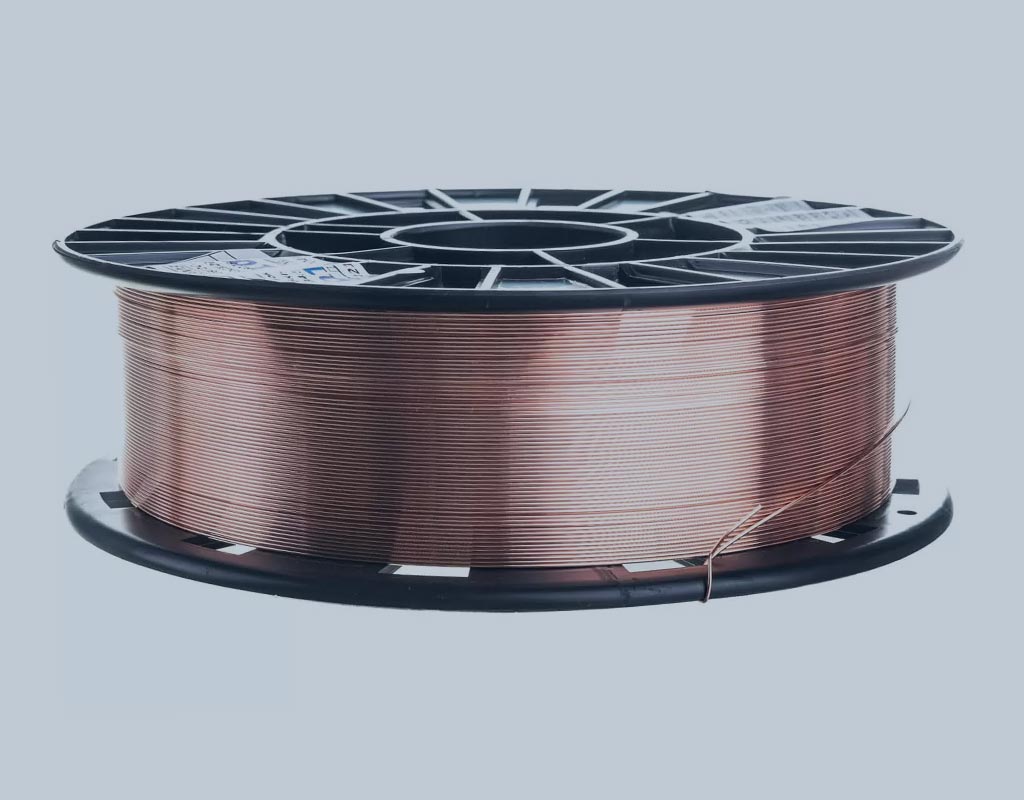
Catalog of copper-plated welding wire: How to choose the ideal option for any task
The company VATRA LLC, a well-known manufacturer of welding electrodes, offers its customers not only welding electrodes and consumables for welding, but also a catalog of copper-plated welding wire.
The quality of consumables directly affects not only the appearance of the weld but also the strength of the entire structure.
In this diversity, copper-plated wire holds a special place — a product that combines corrosion resistance and excellent electrical conductivity.
To help you navigate the assortment, we have prepared a detailed Catalog of copper-plated welding wire, in which we will analyze each diameter, spool type, and application area.
Information on copper-plated welding wire
| Characteristic | Value | Notes |
| Diameter | 0.8 | The most common size for household and semi-professional welding semi-automatic machines. |
| Spool type | D200 | Spool outer diameter 200 mm. Standard inner mounting hole – 52 mm. |
| Diameter | 1.0 | Intermediate diameter. Often used for welding metal from 2 to 10 mm thick. |
| Spool type | D200 | Outer diameter 200 mm, mounting hole 52 mm (standard for most semi-automatic machines). |
| Diameter | 1.2 | Industrial standard. Requires a powerful machine (often professional grade). |
| Spool type | D200 | Spool outer diameter 200 mm. Standard inner mounting hole – 52 mm. |
| Net weight | 5 kg | Weight of the wire itself without the spool. |
| Characteristic | Value | Notes |
| Diameter | 1.0 | Universal diameter for medium thickness metal. |
| Spool type | D270 | Spool outer diameter 200 mm. Standard inner mounting hole – 52 mm. |
| Diameter | 1.2 | The most popular industrial diameter for welding metal from 4 mm thick. |
| Spool type | D270 | Outer diameter 200 mm, mounting hole 52 mm (standard for most semi-automatic machines). |
| Diameter | 1.6 | Industrial standard. Requires a powerful machine (often professional grade). |
| Spool type | D270 | Spool outer diameter 200 mm. Standard inner mounting hole – 52 mm. |
| Net weight | 15 kg | Weight of the wire itself without the spool. |
| Diameter, mm | Spool type | Recommended current, A | Voltage, V | Main application |
| 0.8 | D200 | 40-60 | 16-22 | Thin metal (0.8–5 mm), household and semi-professional machines |
| 1.0 | D200/D270 | 70-280 | 17-22 | Universal, medium thickness metal (2–10 mm) |
| 1.2 | D200/D270 | 80-350 | 18-30 | Thick metal (4–12+ mm), requires a machine from 200–250 A |
| 1.6 | D270 | 120-550 | 23-35 | Industrial, thick-walled structures (6–20+ mm), requires a machine from 300–400 A |
Chemical composition and standards
Copper-coated wire is intended for welding carbon and low-alloy steels.
Purpose: For MIG/MAG welding in carbon dioxide (CO2) or argon-carbon dioxide mixture (80% Ar + 20% CO2).
Characteristics of the weld metal after welding:
Tensile strength: 530 – 650 MPa.
Yield strength: about 420 MPa.
Elongation: about 22%.
The copper coating performs several important functions:
Improved current transfer: Copper reduces the contact resistance between the wire and the contact tip, ensuring arc stability.
Anti-corrosion protection: A thin layer of copper prevents the steel core from rusting during storage.
Weld quality: This wire provides low spatter and forms a smooth, neat weld.
0.8 mm (D200 / 5 kg)
Light and maneuverable wire for household and semi-professional machines. Allows welding of thin metal without burn-through. Provides a neat weld with minimal spatter. The optimal choice for bodywork and thin sheet metal work.
1.0 mm (D200 / 5 kg | D270 / 15 kg)
A universal solution for a wide range of tasks. Combines arc stability with high productivity. Suitable for medium thickness metal. Available in two formats: compact D200 spool for occasional work and industrial D270 for intensive use.
1.2 mm (D200 / 5 kg | D270 / 15 kg)
Industrial standard. Provides high deposition rates, allowing welding of metal from 4 mm thick in a single pass. Due to the wire’s rigidity, jamming in the feed mechanism is eliminated. Recommended for professional machines with a power of 200–250 A or more.
1.6 mm (D270 / 15 kg)
Professional wire for heavy-duty applications. Used in mechanical engineering, shipbuilding, and welding of thick-walled structures. Requires a powerful power source (from 300 A). Provides maximum productivity with a minimum number of passes.
Choosing wire. Catalog of copper-plated welding wire.
It is important to understand: choosing wire is a balance between the power of your machine, the thickness of the metal, and the working conditions. A mistake here leads to arc “popping”, electrode sticking, or burn-through of a thin sheet. Below we present the full specifications for the most popular items so you can choose the best option.
Why copper plating? Technological advantages
Before moving on to the numbers, let’s figure out why a layer of copper is applied to steel wire. This is not just a marketing gimmick, but a serious engineering solution. The thinnest layer of copper (a fraction of a micron thick) solves three key problems:
-
Current stability. Copper has significantly better conductivity than steel. This ensures uninterrupted current supply to the arc zone, reducing losses due to contact resistance in the contact tip.
-
Rust protection. Ordinary steel wire without coating becomes covered with corrosion within a few days in a typical workshop environment. Copper prevents oxidation, extending shelf life.
-
Mechanism cleanliness. The copper coating acts as a solid lubricant, reducing wear on guide channels and feed mechanism rollers.
How to avoid mistakes when choosing: buyer’s checklist
The market is overflowing with offers, and even with the Catalog of copper-plated welding wire in front of you, you can buy a fake. Here are three signs of a quality consumable:
-
Uniform coating. Copper should not crumble into dust when bending the wire. Color ranges from golden-brown to copper, without black spots (signs of over-oxidation).
-
Cross-section geometry. Take a micrometer. High-quality 1.0 mm wire is exactly 1.0 mm along its entire length. Tolerance according to GOST is no more than 0.05 mm plus/minus. If the wire “varies” from 0.9 to 1.1 mm, the welding machine will operate jerkily.
-
Winding cleanliness. On a D270 spool weighing 15 kg, the turns must fit tightly. “Birds’ nests” (overlaps) are unacceptable — this is a guaranteed stoppage of welding at the most critical moment.
Economic aspect: D200 or D270?
Within the framework of the Catalog of copper-plated welding wire, it is important to address the price issue. At first glance, a 15 kg spool costs more than a 5 kg one. But if you calculate the price per kilogram, the D270 format is almost always more profitable by 15–20%.
-
D200 (5 kg): You pay for convenience and compactness. Easy to insert into any machine. If you work 1 hour a week in your garage — take 5 kg, otherwise the wire will absorb moisture and rust under the copper.
-
D270 (15 kg): Savings and fewer downtime for changes. If the machine is stationary and the shift lasts 8 hours — only 15 kg.
Summary: Who gets which wire?
Let’s summarize our review. A smart choice is the key to a smooth weld and a long life for your welding machine.
-
For home, garage, and auto repair: Your choice is 0.8 mm (D200 / 5 kg). Light and maneuverable wire for household and semi-professional machines. Allows welding of thin metal without burn-through. Provides a neat weld with minimal spatter. The optimal choice for bodywork and thin sheet metal work.
-
For farming, construction, and small-scale production: Take 1.0 mm (D200 / 5 kg or D270 / 15 kg). A universal solution for a wide range of tasks. Combines arc stability with high productivity. Suitable for medium thickness metal. Available in two formats: compact D200 spool for occasional work and industrial D270 for intensive use.
-
For professional installation and workshops: We recommend 1.2 mm (D200 / 5 kg | D270 / 15 kg). Industrial standard. Provides high deposition rates, allowing welding of metal from 4 mm thick in a single pass. Due to the wire’s rigidity, jamming in the feed mechanism is eliminated. Recommended for professional machines with a power of 200–250 A or more.
-
For heavy mechanical engineering and shipbuilding: Only 1.6 mm (D270 / 15 kg). Professional wire for heavy-duty applications. Used in mechanical engineering, shipbuilding, and welding of thick-walled structures. Requires a powerful power source (from 300 A). Provides maximum productivity with a minimum number of passes.
Use our Catalog of copper-plated welding wire as a cheat sheet. Remember, high-quality copper-plated wire is not a cost item to save on. It directly affects the reliability of the joint and your safety during work. Happy welding!
Consultation phones:
We quickly respond to questions on Telegram
Contacts

Company phone numbers:
+375 (29) 688-27-06
+375 (17) 388-28-02 accountant
+375 (17) 388-28-03 sales department

Email address:


Social network chat:

Social network chat:


